How to Fix a Lawn Mower That Starts Then Stops: 7 Causes and How to Test Each One
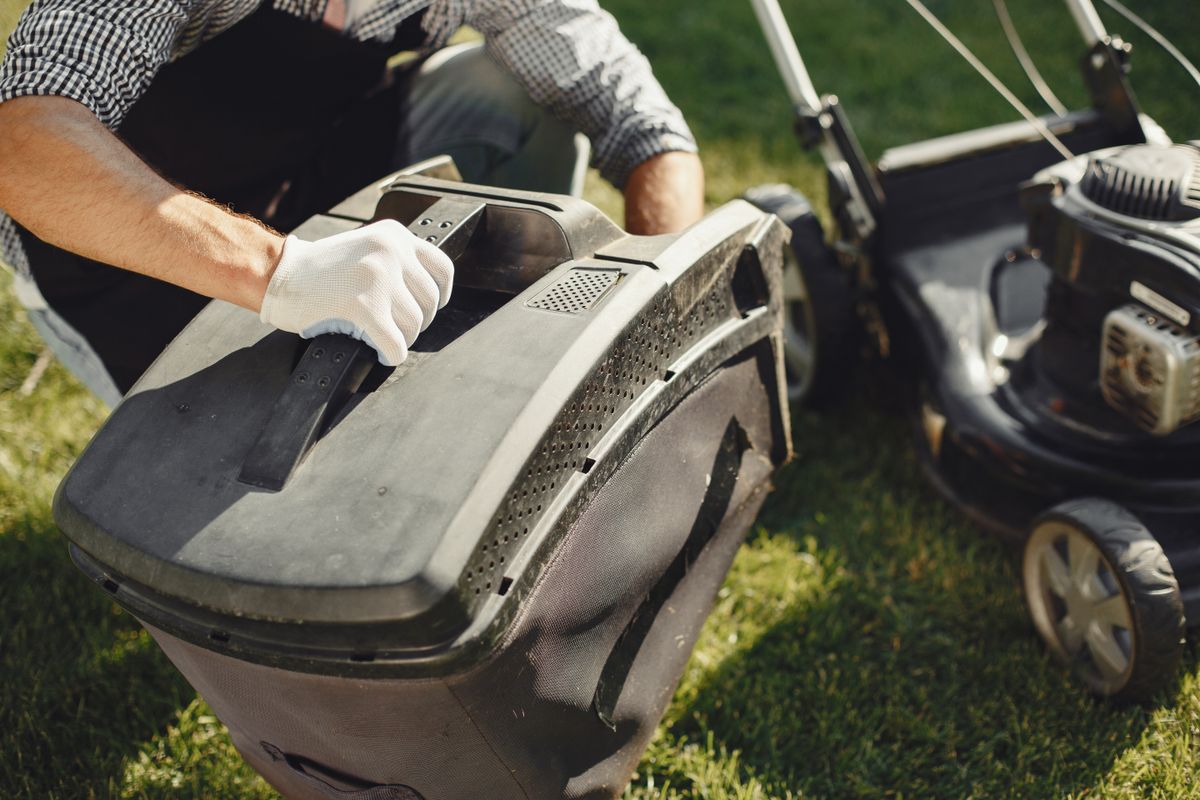
Photo by Gustavo Fring on Pexels
By Tondio Team · AI-generated content
Mower fires up then dies? Work through these 7 causes in order—from stale fuel to carburetor issues—before spending a dime at the repair shop.
How to Fix a Lawn Mower That Starts Then Stops: 7 Causes and How to Test Each One
Most mowers that start and immediately die don't need a carburetor rebuild. They need a $4 fuel filter or 30 seconds adjusting a choke lever.
The problem with most troubleshooting guides is that they skip straight to the expensive, intimidating stuff — disassembling carburetors, pulling spark plug wires, ordering rebuild kits. Meanwhile, you're standing in your driveway in 90-degree heat when the actual fix was sitting right in front of you. A lawn mower that fires up then shuts off is almost always starving for fuel, air, or spark — and the culprit is usually something you can diagnose with your eyes, a screwdriver, and maybe a multimeter.
This guide walks you through all 7 causes in order of likelihood and complexity. Work through them sequentially. Don't skip ahead. The goal is to find the simplest fix first — and in most cases, you will.
The 60-Second Pre-Diagnosis Checklist
Before you pull a single bolt, spend one minute here. These three things account for roughly 40% of all start-then-stall problems and require zero tools to check.
1. How Old Is Your Fuel?
This is the question most people skip, and it's the one that bites them the hardest.
Modern gasoline — especially ethanol-blended fuel (E10 or E15, which is what you're pumping at almost every station in the U.S.) — begins to degrade in as little as 30 days. By 60 days, it's noticeably less volatile. By 90 days, it can leave behind a sticky varnish residue that partially clogs fuel passages and causes exactly the symptom you're dealing with: the engine catches on volatile vapors near the top of the tank, runs for a few seconds, then starves and dies.
Ask yourself: Did this mower sit through winter with fuel in the tank? Did you fill it in April and it's now July? If there's any chance the fuel is more than 30 days old, drain it. Completely. Use a hand siphon pump, pour it into an approved container, and refill with fresh 87 octane (or your engine manufacturer's spec). This single step fixes a significant percentage of start-then-stall issues.
Pro Tip: Use Tondio to log the date every time you refuel your mower. It sounds trivial, but when you're troubleshooting in July and can't remember if you fueled up in May or June, that log is worth its weight in gold. Set a reminder to add fuel stabilizer any time you're going more than 3 weeks between uses.
2. Check the Choke Position
The choke restricts airflow to richen the fuel mixture during cold starts. It should be fully open once the engine warms up — typically within 15–30 seconds of starting. If your choke is stuck partially closed or you forgot to open it after a cold start, the engine runs rich, loads up with unburned fuel, and dies.
On most push mowers, the choke is integrated into the throttle/primer system. On riding mowers and zero-turns, it's often a separate lever or knob. Confirm:
- Choke is fully closed for initial cold start ✓
- Choke is moved to the open/run position within 30 seconds ✓
- The choke plate inside the carburetor throat actually moves when you adjust the lever (sometimes the linkage disconnects) ✓
3. Inspect the Air Filter
Pull the air filter cover — usually a single wing nut or snap clip on the side of the engine. Take the filter out and hold it up to sunlight or a flashlight.
- Paper/pleated filter: You should be able to see light through it. If it's caked brown or gray and light won't pass, it's done.
- Foam filter: It should be lightly oiled and free of debris. If it's bone dry, oil-soaked to the point of dripping, or disintegrating, replace it.
A severely clogged air filter creates the same lean-fuel condition as a bad carburetor. The engine starts on a small charge of air/fuel, then immediately starves because it can't breathe. A new air filter costs $5–$12 and takes 90 seconds to install. If yours is marginal, replace it before doing anything else and retest.
Cause #1: Stale or Contaminated Fuel
We touched on this above, but let's go deeper — because fuel problems have a few different failure modes.
What to Look For
Drain a small amount of fuel into a clear glass jar. Fresh gasoline is bright, translucent, and smells sharp. Bad fuel looks darker — sometimes brownish or yellowish — and may have a sour, varnish-like smell. You might even see sediment or a separation layer if water has gotten into the tank.
Water contamination is more common than most people realize. Condensation builds up inside metal fuel tanks during temperature swings, and if your mower sits outside through summer nights and hot days, you can accumulate enough water to cause misfires and stalling.
The Fix
- Drain the tank completely
- If you suspect water contamination, add a product like Sta-Bil or Sea Foam to help absorb residual moisture
- Check the fuel filter while you're in there (see Cause #2)
- Refill with fresh fuel and retest
Common Mistake: People add fresh fuel on top of old fuel thinking it'll dilute the problem. It won't. The varnish residue is already in the fuel passages and bowl. Drain it all.
Cause #2: Clogged Fuel Filter
This is the $4 fix that most guides completely ignore.
The fuel filter is a small inline canister — usually translucent plastic — that sits in the fuel line between the tank and the carburetor. On most walk-behind mowers, you'll find it near the tank or under the engine shroud. On riding mowers, it's typically under the frame near the tank.
How to Test It
- Locate the fuel filter and look through it. If it's opaque, dark brown, or you can see debris inside, it's clogged.
- Even if it looks okay, you can do a flow test: shut off the fuel valve (if equipped), disconnect the outlet side of the filter, place the line into a small container, open the valve, and check flow. You should get a strong, steady stream. A weak trickle or intermittent drips means restricted flow — the engine starts on residual fuel in the bowl, then dies once it's depleted.
The Fix
Replace the filter. Seriously — even if it passes the visual test, if you're troubleshooting a fuel-related stall and the filter is more than one season old, just replace it. They cost $4–$8 and take 5 minutes. This is the cheapest possible solution to what can look like a very expensive problem.
Pro Tip: Fuel filters should be replaced every season or every 25 hours of run time — whichever comes first. Log your mowing hours in Tondio and set a maintenance reminder so you're not guessing next spring.
Cause #3: Dirty Carburetor Bowl (Test Before You Disassemble Anything)
Here's where most guides go wrong: they tell you the carburetor is probably the problem and then jump straight to "remove and rebuild." You don't need to do that yet. There's a simple test that tells you if the carburetor bowl is the culprit — and a quick fix that works about half the time without any disassembly.
Understanding What's Happening
The carburetor bowl is a small reservoir that holds a ready supply of fuel for the engine. At the bottom of the bowl is a small brass fitting called the bowl drain screw (sometimes called the main jet or drain plug). Over time, ethanol-blended fuel leaves behind a sticky varnish that can partially or fully clog this jet — causing the engine to start on vapors, run for 5–15 seconds, then die as soon as the main fuel circuit kicks in and finds nothing but varnish.
The Float Bowl Test
- Locate the carburetor — it's attached to the side of the engine block, connected to the air filter on one side and the fuel line on the other
- Look for the bowl drain screw at the very bottom of the carburetor — it's usually a slotted or hex brass screw
- Place a rag or small container underneath it
- Crack the screw loose slightly (don't remove it) and see if fuel flows out
What your results mean:
- Fuel flows freely and looks clean: The bowl itself isn't starved. Your issue is elsewhere.
- No fuel flows: Clogged jet, failed fuel valve, or restricted fuel line. A shot of carburetor cleaner into the drain port (with screw removed) can sometimes clear a soft clog.
- Fuel flows but looks dark or varnished: The bowl has contamination. Clean or replace it.
The Spray Test (Quick Carb Diagnosis)
Remove the air filter. With the engine off, spray a 1-second burst of carburetor cleaner or starting fluid directly into the carburetor throat. Immediately try to start the engine.
- If it starts and runs longer than usual before dying: The carb is starving for fuel — the spray gave it what it needed. Your problem is fuel delivery (filter, fuel line, float needle).
- If it starts and dies at the same speed as before: The problem isn't fuel delivery — look at ignition (Cause #6) or safety switches (Cause #7).
Common Mistake: Spraying starting fluid repeatedly to "keep it running." This isn't a fix — it's a diagnostic tool. Over-relying on starting fluid can wash cylinder walls of oil and cause premature wear.
Cause #4: Vapor Lock (More Common in Summer Than You Think)
Here's one that gets misdiagnosed constantly in the summer months, and almost never in spring or fall. That's your first clue.
What Is Vapor Lock?
Vapor lock happens when fuel in the fuel line or carburetor gets so hot that it vaporizes before reaching the engine. The engine starts fine (liquid fuel is already in the bowl), runs for a minute or two, then dies as the vapor bubbles interrupt fuel flow. Here's the key tell: if you let the mower sit for 15–20 minutes and it starts right back up, vapor lock is almost certainly your problem.
Why Summer Specifically?
At ambient temperatures above 85°F — which is standard summer mowing weather — fuel line temperatures in direct sunlight can exceed 120–130°F. Modern ethanol-blended fuels have a lower vapor pressure than pure gasoline, meaning they vaporize more readily at these temperatures. Engines mounted low to the ground or near hot concrete or asphalt driveways are especially vulnerable.
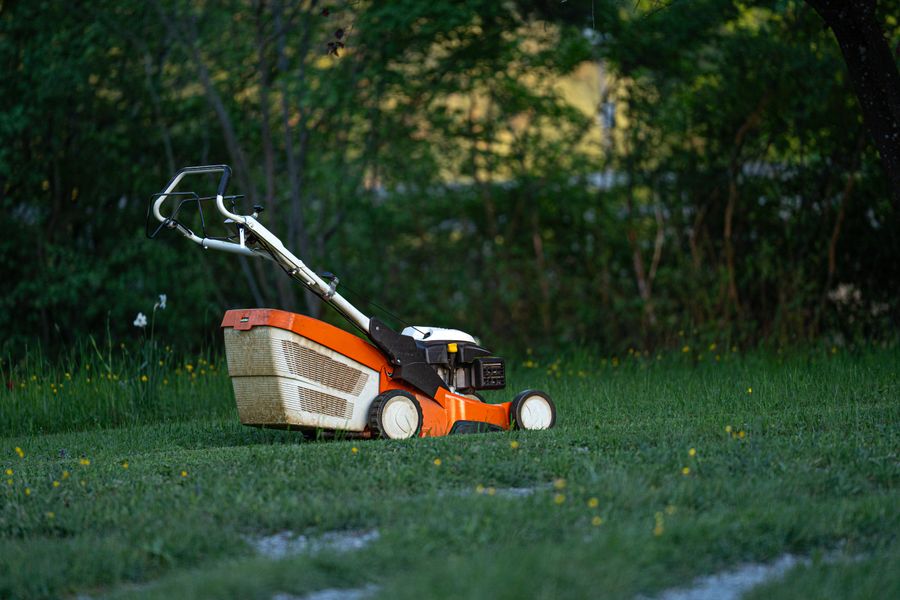
Photo by Joel Hägele on Pexels
How to Confirm It
- Mower starts fine → runs 1–3 minutes → dies
- Restarting immediately fails (no fuel vapor to catch)
- Waiting 15–20 minutes → starts right back up → runs 1–3 minutes → dies again
That restart pattern is the fingerprint of vapor lock.
The Fix
- Short term: Wrap exposed fuel lines with reflective heat wrap (available at any auto parts store, ~$10–15 for a roll). This alone solves most summer vapor lock issues.
- Check the gas cap vent: A clogged cap vent creates a vacuum in the tank that worsens vapor issues. Loosen the cap while the engine is running — if it suddenly runs better, you've found the problem. Replace the cap (~$5–8).
- Mow in the early morning or evening when ambient temps are below 85°F if vapor lock is a recurring issue.
- Switch to ethanol-free fuel if it's available in your area. It has a higher vapor pressure and resists vapor lock significantly better.
Cause #5: Spark Plug Fouling or Failure
A degraded spark plug can deliver just enough spark to start the engine, then fail once it heats up under load — classic intermittent failure behavior.
How to Inspect
Remove the spark plug (you'll need a spark plug socket — typically 5/8" or 13/16"). Look at the electrode tip:
| Condition | What It Means |
|---|---|
| Light tan or gray | Normal, healthy combustion |
| Black and sooty | Running rich — too much fuel, too little air |
| Black and oily | Oil is getting into the combustion chamber |
| White or blistered | Running lean or overheating |
| Worn/eroded electrode | Past its service life — replace it |
The Gap Check
Even a new-looking plug can cause intermittent misfires if the gap is wrong. Use a feeler gauge to check the gap at the electrode. Most small engines call for a gap of 0.030" (check your engine manual — Briggs & Stratton, Kawasaki, and Honda all have slightly different specs). Adjust with a gapping tool if needed.
The Fix
If the plug is fouled, damaged, or gapped incorrectly, replace it. A new plug costs $3–6. Replace plugs every season or every 100 hours — they're a maintenance item, not a repair item.
Pro Tip: Write the plug replacement date and hours on a piece of tape on your mower deck, or log it in Tondio as a scheduled maintenance task. When you can pull up that history instantly, you'll never second-guess whether a plug is due.
Cause #6: Ignition Coil Failure (Heat-Related)
This one is less common but worth testing if everything else has checked out, especially if the stall happens after a consistent warm-up period — say, exactly 3–5 minutes every time.
How the Coil Fails
The ignition coil converts battery or flywheel-generated voltage into the high-voltage spark that fires the plug. Coils can develop hairline cracks in their internal windings that function fine when cold but short-circuit once the coil reaches operating temperature (~200–250°F). The engine starts, runs until the coil hits failure temperature, then cuts out.
How to Test It
The definitive test requires a spark tester:
- Remove the spark plug wire and connect it to a spark tester (a $10 tool available at any hardware store)
- Ground the tester to the engine block
- Start the engine and let it run until it dies
- Immediately try to restart it — watch the tester for spark
If you have spark when cold but no spark when hot: The coil is failing. This is a heat-related coil breakdown. Replacement coils run $20–60 depending on your engine brand.
If you have no spark at all: Could be the coil, the kill switch wire shorting to ground, or the ignition module. Check that the kill switch wire (the one attached to the coil) isn't pinched or touching bare metal.
Cause #7: Safety Cut-Off Switch Failures
This is the most overlooked cause on riding mowers and zero-turns, and it can perfectly mimic a fuel or carburetor problem. Modern riding mowers have 3–5 safety interlock switches — seat sensor, blade engagement switch, brake/clutch switch — and any one of them failing can cause a random shutdown.
How the System Works
The safety interlock system is designed to cut the engine if certain conditions aren't met: rider in the seat, blade disengaged before dismounting, brake/parking brake engaged, etc. These switches fail in two main ways:
- They stick open — always sending a "kill" signal
- They make intermittent contact — working fine sometimes, triggering a false kill signal other times
When a switch fails intermittently, the mower starts normally, runs fine, then randomly dies — exactly like a fuel problem. The difference: safety switch failures often happen at a consistent operational trigger (mowing over a bump, shifting weight in the seat, engaging the blades).
How to Test with a Multimeter
Set your multimeter to continuity mode (the beep setting).
Seat Switch Test:
- Locate the seat switch under the seat (usually a plunger-style switch connected to a 2-wire harness)
- Unplug the harness
- Press the plunger down (simulating a person sitting) — you should get continuity (beep)
- Release the plunger — continuity should break (no beep)
- If you get continuity in both states, or no continuity in either state, the switch is bad
Blade Engagement Switch Test:
- Locate the PTO/blade engagement switch (usually under the dash panel)
- Disconnect it and test continuity in both the engaged and disengaged positions
- The switch should have continuity in one position only
Quick-and-Dirty Test (Use with Caution): You can temporarily bypass a suspected switch by disconnecting it and jumping the two connector pins with a short wire. Only do this for testing purposes on a stationary mower with the blade disengaged. If the mower suddenly runs fine with the switch bypassed, you've found your problem. Replace the switch — don't leave it bypassed.
Common Mistake: Leaving safety switches bypassed permanently. These switches exist for a reason — people have been seriously injured by mowers that didn't shut off when they should have. Test with a bypass, confirm the diagnosis, order the correct replacement switch (~$8–25), and reinstall it.
Sequential Troubleshooting Action Plan
Work through this in order. Don't skip steps. Stop as soon as you find and fix the problem, then retest.
Before you start: Have fresh fuel, a spare air filter, a spare spark plug, and a can of carburetor cleaner on hand. Total investment: under $25.
- Step 1: Check fuel age — if over 30 days, drain and refill with fresh fuel
- Step 2: Check choke position — confirm it moves fully open after 15–30 seconds
- Step 3: Inspect air filter — replace if clogged or degraded
- Step 4: Replace fuel filter — especially if more than one season old
- Step 5: Do the carburetor bowl drain test — check flow and fuel quality
- Step 6: Do the spray test — spray carb cleaner into throat to isolate fuel vs. ignition
- Step 7: Check for vapor lock pattern — does it restart after 15–20 min cool-down?
- Step 8: Inspect and gap the spark plug — replace if fouled or worn
- Step 9: Test ignition coil with spark tester (hot vs. cold)
- Step 10: Test safety cut-off switches with multimeter
When to escalate to a repair shop: If you've replaced the fuel, filter, air filter, and spark plug; confirmed the carburetor has fuel flow; ruled out vapor lock; and tested all safety switches — and it still stalls — you likely have an internal carburetor issue (worn needle seat, deteriorated diaphragm, or cracked float) that requires a rebuild or replacement. At that point, a shop visit or a new aftermarket carburetor ($15–40 on Amazon for most common engines) makes sense.
Keep Your Equipment Records Where They Actually Help You
One thing that makes troubleshooting dramatically easier — and faster — is knowing your equipment's history. When did you last change the fuel filter? Replace the plug? Run a full tank of ethanol-free fuel? If you're staring at your mower in July trying to remember what you did last October, that's lost time.
Tondio lets you log maintenance events with dates, hours, and notes — so next time your mower acts up, you can pull up its full service history in 10 seconds instead of guessing. You can also attach photos, which is surprisingly useful when you're trying to remember exactly what a component looked like before you reassembled it, or documenting a part number for a future order.
The Bottom Line
A mower that starts and dies is almost never a death sentence for your equipment — and it's almost never a $200 carburetor rebuild job either. In the vast majority of cases, it's stale fuel, a clogged filter, a fouled plug, or a stuck safety switch. Total parts cost for a full "first-pass" diagnostic refresh — fuel, filter, air filter, plug — is under $30 at most hardware stores.
Work the checklist. Go in order. Test before you disassemble. And if you're consistently battling summer stalls, take a hard look at vapor lock — it's dramatically underdiagnosed and costs almost nothing to address.
Your mower is a piece of equipment you depend on. Treat it like one, track its maintenance history, and it'll start reliably every single time you need it.
Have a repair question or a troubleshooting tip that worked for you? Drop it in the comments below — this community runs on shared experience.