Why Is My Lawn Growing Mushrooms and Should You Remove Them Before They Spread
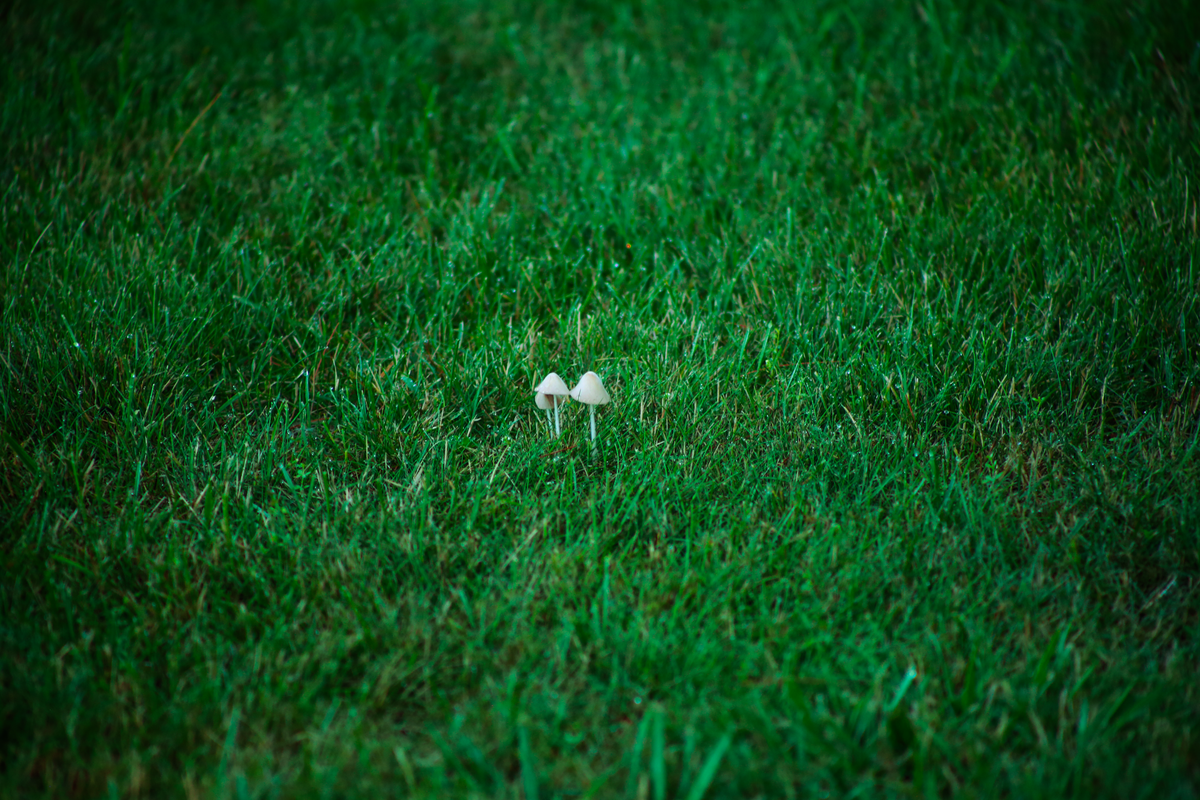
Photo by Lazaro Kibukira on Pexels
By Tondio Team · AI-generated content
Mushrooms in your lawn aren't the problem — they're a symptom. Learn what's really causing them, when to act, and when to leave them alone.
Why Is My Lawn Growing Mushrooms and Should You Remove Them Before They Spread
That bottle of fungicide in your hand? Put it down. It won't do a thing.
Mushrooms in your lawn aren't a disease you can spray away. They're the above-ground fruit of a fungal network that's been living underground for months — sometimes years — quietly doing its job. By the time you see those caps popping up after a summer rain, the real story is already happening about 6 to 12 inches beneath your feet.
Most homeowners panic, grab the nearest chemical, and douse the lawn. The mushrooms die back... and then return two weeks later after the next rainstorm. Sound familiar? Here's what's actually going on, when you genuinely need to act, and the one situation where mushrooms are signaling a real turf problem you cannot afford to ignore.
What's Really Causing Mushrooms in Your Summer Lawn
It Starts Underground, Not on the Surface
Fungi don't just appear out of nowhere. They're decomposers — organisms that break down organic matter and recycle nutrients back into your soil. When conditions align (warm temperatures, moisture, and a food source), the fungal network you've had underground for a long time produces fruiting bodies. Those fruiting bodies are the mushrooms you're seeing on the surface.
The three conditions that trigger a summer mushroom flush are almost always present at the same time:
- Soil temperatures between 60°F and 80°F — exactly the range most lawns hit from late June through August
- Sustained soil moisture following rainfall or heavy irrigation
- A buried organic food source the fungus is actively breaking down
That last point is the one most people miss entirely. Your mushrooms aren't random. They are growing in a specific spot for a specific reason, and that reason is almost always something buried directly below them.
The Buried Organic Matter Problem
Think back to what happened in that part of your yard over the last several years:
- A tree stump was ground down but the root system was left in place
- Construction lumber or wood debris was buried during landscaping or a renovation
- An old hedge or shrub was removed and its roots are still decaying underground
- A thick thatch layer — anything over ½ inch — has built up and is holding moisture against the soil
- Old tree roots from a tree removed years ago are still decomposing several inches down
The fungal network feeds on all of it. And the deeper and larger the organic mass, the longer the mushrooms will keep coming back — sometimes for 3 to 7 years until the buried material fully breaks down.
This is why pulling the mushrooms or spraying the surface accomplishes almost nothing in the long term. You're addressing the fruit, not the tree.
Why Summer Rain Is the Trigger
Fungal fruiting is a reproductive response. When the organism has enough moisture and energy, it pushes up a fruiting body to release spores and spread. Hot, dry spells followed by a heavy rainfall of 1 inch or more are the classic trigger for a sudden mushroom flush in summer lawns.
This is also why you'll often see mushrooms disappear on their own within 3 to 5 days as the surface dries out, then return again after the next rain event. The fungus isn't going anywhere. It's just waiting.
Pro Tip: If you're tracking your irrigation schedule and rainfall in Tondio, you'll start to notice the pattern — mushroom flushes tend to appear roughly 48 to 72 hours after a significant moisture event when soil temps are in that 65°F–75°F sweet spot. Knowing this helps you stay ahead of it rather than reacting in surprise every time.
Scattered Mushrooms vs. Fairy Ring — This Distinction Matters Enormously
Not all lawn mushrooms are created equal. Random scattered mushrooms and fairy ring are two completely different situations that require completely different responses.
Random Scattered Mushrooms
If your mushrooms are popping up in no particular pattern — a cluster near the back fence, a few near an old tree, some along the edge of a mulch bed — you're dealing with standard decomposer fungi responding to buried organic matter. This is the benign version.
What it means for your turf: Almost nothing. These fungi are actually helping break down material and cycle nutrients. Your grass may be completely unaffected.
What you should do: Honestly? Very little. More on physical removal below.
Fairy Ring: The One Scenario That Signals Real Turf Damage
Fairy ring is different. It's not just cosmetic. If you see mushrooms appearing in a circle or arc — even a partial arc — combined with any of the following, you have a fairy ring problem:
- A dark green ring of noticeably lush, fast-growing grass 6 to 24 inches wide tracing the circle
- A brown, dead ring of grass inside or alongside the green ring
- Dry, hydrophobic soil inside the ring that water beads off of rather than soaking in
- The ring expanding outward by 6 to 24 inches per year
Here's why fairy ring is serious: The dense mycelium mat created by fairy ring fungi can become so thick that it actually waterproofs the soil, preventing moisture and nutrients from reaching grass roots. That dead ring you see isn't cosmetic — the grass is dying from drought stress even when you're watering, because water is physically unable to penetrate the mycelial layer.
The three types of fairy ring damage, in plain terms:
| Type | What You See | Turf Damage |
|---|---|---|
| Type I | Dead/brown grass ring | Severe — roots cut off from water |
| Type II | Dark green stimulated ring | Moderate — nitrogen flush from decomposition |
| Type III | Mushroom ring only, no turf effect | None — purely cosmetic |
Type I fairy ring is the situation where you cannot afford to do nothing. Left untreated, a fairy ring expands outward continuously and the dead zone grows with it.
Pro Tip: Take a photo of the ring today and again in 30 days. Tondio's) photo documentation feature lets you log these images by lawn zone with timestamps, so you can measure exactly how fast a fairy ring is expanding — critical information for deciding whether to escalate treatment.
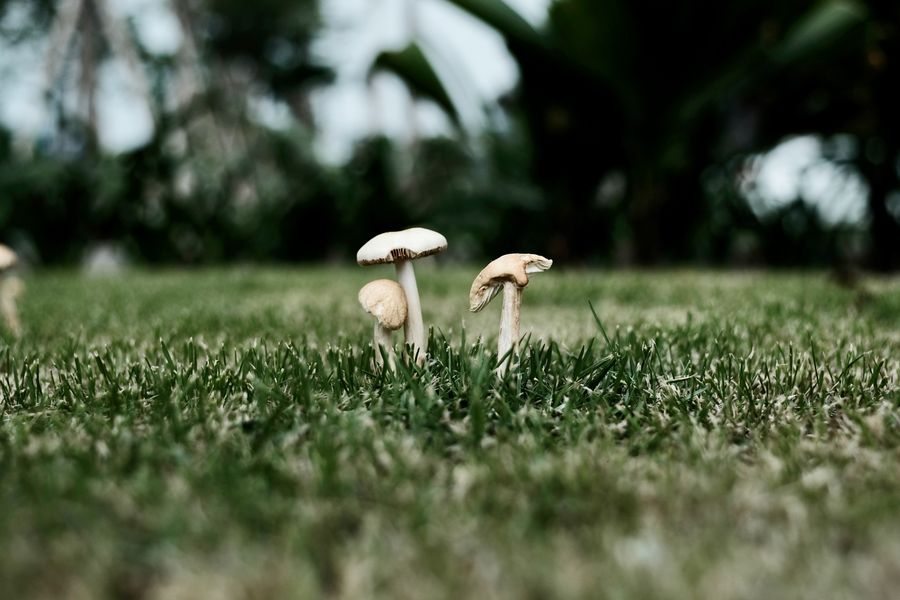
Photo by Nguyen Huy on Pexels
Physical Removal vs. Soil Treatment — What Actually Works
Should You Remove Mushrooms When You See Them?
Yes, but not for the reason you think. Removing mushrooms does not reduce the underlying fungal population. The mycelium underground is entirely unaffected by what you do on the surface.
However, there are two valid reasons to remove them physically:
- Safety — If you have children or pets, removing mushrooms eliminates any risk of accidental ingestion. Never attempt to identify lawn mushrooms as edible or non-toxic without expert verification.
- Spore spread — While the mycelium underground is already established, removing mushroom caps before they fully open and release spores can modestly slow the spread to new areas of the lawn.
How to remove them correctly:
- Knock or kick mushrooms over early in the morning before caps open fully
- Collect them in a bag and dispose of them in the trash — not the compost pile
- Do this within 24 to 48 hours of emergence for best results on spore control
- Wear gloves — not because they're dangerous to touch, but as basic hygiene practice
What removing mushrooms won't do: eliminate recurrence, kill the fungal network, or fix anything about the underlying cause.
What Actually Reduces Recurrence
For scattered random mushrooms, the long game is source removal:
- Excavate buried wood or debris if you can locate it. A buried 4x4 timber or old stump root is a multi-year mushroom factory. Dig it out and the mushrooms stop within one or two seasons.
- Dethatch aggressively if your thatch layer exceeds ½ inch. Thatch is a food and moisture source for surface-level decomposer fungi. Core aeration combined with dethatching — ideally in late summer or early fall — removes the fuel supply.
- Improve drainage in consistently wet areas. Fungi thrive in soil that stays moist. Grading, French drains, or adjusting irrigation zones to reduce saturation all lower the baseline conditions that trigger fruiting.
- Don't over-water. More than 1 to 1.5 inches per week (combined rain and irrigation) in summer creates ideal fungal conditions. Scale back irrigation 24 to 48 hours before a forecasted rain event.
For fairy ring, the approach is more aggressive:
- Aeration + wetting agent: Core aerate the ring and the 2-foot buffer zone around it, then apply a soil penetrant (wetting agent) to break the hydrophobic mycelial mat and restore water infiltration. This is the first-line treatment for Type I and Type II rings.
- Repeat applications: Plan for 3 to 4 wetting agent treatments spaced 2 weeks apart during the active growing season. One application rarely solves it.
- Soil excavation (severe cases): For persistent Type I rings causing significant turf death, the only reliable long-term fix is excavating the soil to a depth of 12 to 24 inches and a width of 12 inches outside the ring, removing and replacing it with clean topsoil, and reseeding. This is labor-intensive but it works.
- Fungicide — used correctly: Unlike scattered mushrooms where fungicide is useless, propiconazole-based fungicides applied as a soil drench (not a surface spray) can suppress fairy ring activity. Apply at label rates, typically 2 to 4 fluid ounces per 1,000 square feet, watered in deeply. Manage expectations — this suppresses, it doesn't eliminate.
Common Mistake: Applying a granular or surface-spray fungicide to random scattered mushrooms. It does nothing because the active fungal network is 6 to 12 inches underground, completely out of reach of any surface application. You're wasting money and chemicals.
Timeline: What to Expect When You Start Treating
Honesty matters here — mushroom issues don't resolve in a week. Set realistic expectations:
| Situation | Treatment | Expected Resolution |
|---|---|---|
| Scattered mushrooms, buried debris removed | Excavation + surface cleanup | 1 to 2 growing seasons |
| Scattered mushrooms, debris not removable | Thatch management + drainage improvement | 2 to 4 seasons as debris breaks down naturally |
| Fairy ring, Type II or III | Aeration + wetting agent | Visible improvement in 4 to 8 weeks; full suppression 1 season |
| Fairy ring, Type I | Aeration + wetting agent + fungicide | 1 full season of consistent treatment |
| Fairy ring, severe Type I | Soil excavation and replacement | Permanent fix after one season of recovery |
The underground decomposition process operates on its own timeline. Your job is to reduce the conditions that make it worse and remove food sources where you can — not to declare war on the fungus with chemicals that can't reach it.
Pro Tip: Log your treatment dates, products used, and application rates in Tondio. When mushrooms return (and they may for a season or two), you'll have an exact record of what you did and when — so you're building on real data instead of guessing whether last year's treatment made any difference.
Summer Mushroom Action Plan
Work through this in order. Don't skip to treatments before you've identified the cause.
Step 1: Identify the pattern
- Are mushrooms scattered randomly or forming a circle/arc?
- If circular: measure the diameter and check for dark green or brown grass rings
- If scattered: identify the most likely buried organic source beneath them
Step 2: Assess your moisture situation
- Measure your thatch layer — is it over ½ inch?
- Check your weekly irrigation total — are you exceeding 1.5 inches per week?
- Identify any consistently waterlogged areas in the affected zones
Step 3: Physical removal (immediate)
- Remove visible mushrooms within 48 hours of emergence
- Bag and trash them — don't compost
- Document with photos, noting exact location in your lawn
Step 4: Address the source
- For buried debris: excavate if accessible, flag location for ongoing monitoring if not
- For thatch: schedule a core aeration + dethatching pass (late summer to early fall)
- For fairy ring: begin wetting agent applications, schedule aeration of the ring and buffer zone
Step 5: Adjust long-term conditions
- Dial back irrigation in affected zones
- Improve drainage if standing water is present after rain
- Set a reminder to reassess in 30 days
Pro Tip: Use Tondio's) reminder and notes system to schedule your 30-day reassessment and flag the affected zones. If you're managing a larger property with multiple problem areas, the multi-location tracking feature keeps each zone's history separate so you're not mixing up what treatment went where.
The Bottom Line
Mushrooms in your lawn are almost never an emergency — but they are always information. They're telling you something organic is decomposing underground, your soil is staying moist, and the conditions are right for fungal reproduction. Most of the time, that's a minor inconvenience with a straightforward long-term fix.
The exception is fairy ring. If you see that circle forming with dead or aggressively green grass alongside it, act quickly with aeration and wetting agents before the mycelial mat locks moisture out of your root zone entirely.
Stop buying fungicide to spray on random scattered mushrooms. It doesn't work, and the money is better spent on a core aerator rental or a soil penetrant that will actually reach the problem.
The real fix is underground. Start there.
Track your lawn's mushroom history, log treatments, and set follow-up reminders with Tondio. Because guessing doesn't fix turf problems — data does.