Summer fertilizer timing for dense, dark green grass without encouraging disease
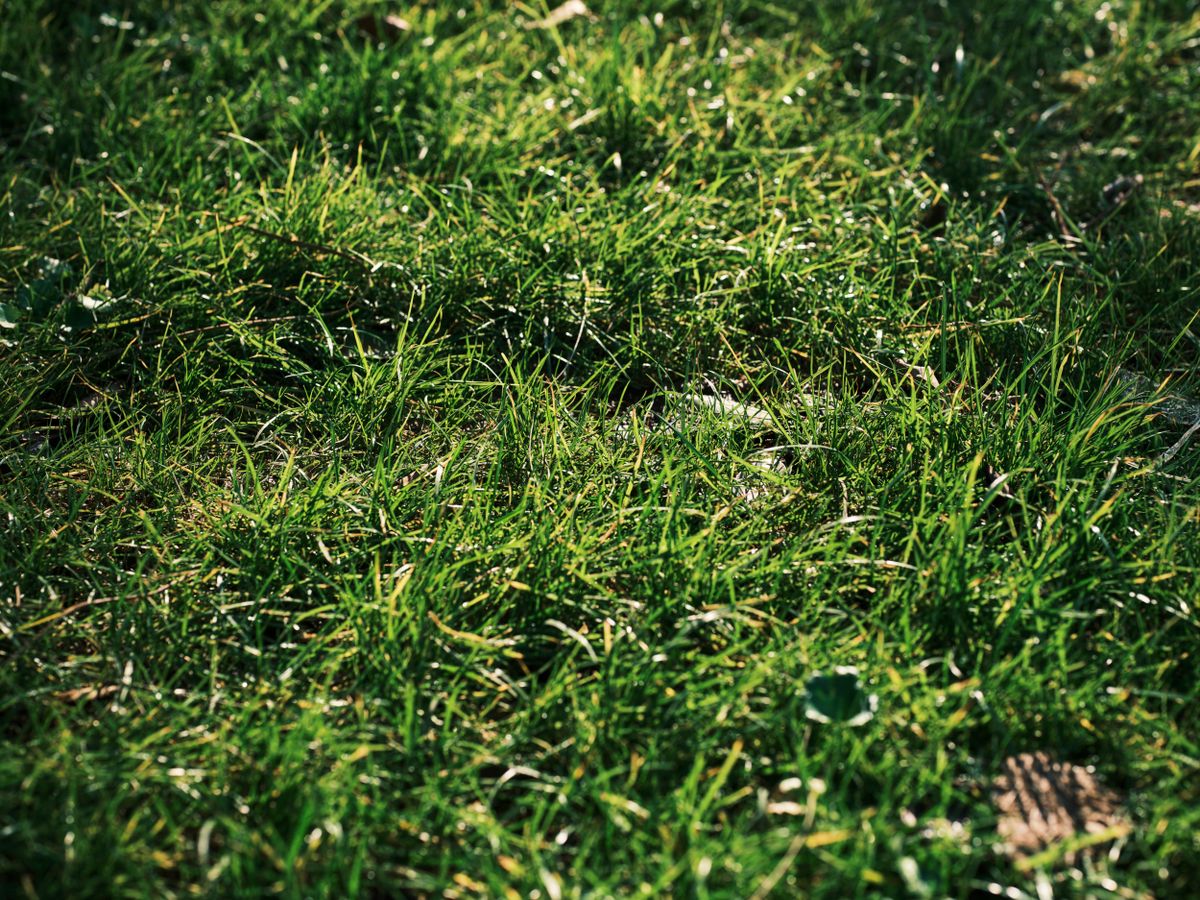
Photo by Engin Akyurt on Pexels
By Tondio Team · AI-generated content
A month-by-month summer feeding schedule that maximizes lawn color and density while reducing disease risk. Learn when to fertilize—and when not to.
That beautiful dark green lawn you're chasing? Summer fertilizer can either deliver it or destroy it—the difference is timing.
Here's the uncomfortable truth: most lawn enthusiasts either blast their grass with nitrogen during the hottest weeks (hello, brown patch outbreak) or skip summer feeding entirely out of fear, watching their turf thin out and turn pale. Both approaches fail because they ignore what your soil is actually telling you and when your grass can safely use nutrients.
The sweet spot exists, and it's backed by soil data, not guesswork. Let's build a summer fertilizer strategy that gives you dense, dark green grass without inviting fungal diseases to the party.
Read Your Soil Test First—You Might Not Need Summer Fertilizer at All
Before you throw down a single granule, pull a soil test between late May and early June. This single step prevents 90% of summer fertilizer mistakes.
Here's what you're looking for:
- Nitrogen availability: Soil tests don't directly measure nitrogen (it's too dynamic), but they show organic matter percentage. Every 1% of organic matter releases roughly 20-40 lbs of nitrogen per 1,000 sq ft annually through mineralization—most of it during warm weather.
- Phosphorus (P) levels: If your test shows >50 ppm, skip phosphorus entirely. Summer applications won't help and may run off.
- Potassium (K) levels: Target 150-250 ppm for heat stress tolerance. Below 100 ppm? Your grass needs K supplementation before nitrogen.
- pH reading: Outside the 6.0-7.0 range, nutrient uptake crashes—fix this first or your fertilizer becomes expensive lawn decoration.
The Organic Matter Factor
If your soil test shows 4% or higher organic matter, you likely don't need any nitrogen applications in June or July for cool-season grasses. The soil is already feeding your lawn through natural decomposition accelerated by summer heat.
For warm-season grasses in peak growing season, you've got more flexibility, but you still shouldn't exceed 0.5-1.0 lb nitrogen per 1,000 sq ft per month even with lower organic matter.
Pro tip: Log your soil test results in Tondio to track how your nutrient levels change year over year. You'll start seeing patterns—like how that spring compost application is actually reducing your summer fertilizer needs over time.
June: Front-Load with Slow-Release When Safe
Temperature threshold: Apply only when nighttime lows stay below 70°F.
June is your best summer fertilization window for cool-season grasses—before serious heat stress kicks in. Warm-season grasses are ramping up and can handle moderate feeding.
Cool-Season Grasses (Kentucky Bluegrass, Perennial Ryegrass, Tall Fescue)
If you're feeding in June, go with 50-75% slow-release nitrogen:
- Application rate: 0.5 lb N per 1,000 sq ft maximum
- Product type: Methylene urea, polymer-coated urea, or sulfur-coated urea
- Why slow-release: Prevents the nitrogen spike that fuels brown patch and dollar spot when humidity inevitably climbs
- Supplement with potassium: Use a 3-1-2 or 4-1-2 ratio (like 24-5-11) to strengthen cell walls before heat arrives
Common mistake: Applying quick-release nitrogen on that picture-perfect 75°F June day, then watching brown patch explode when temps hit 85°F three days later with the nitrogen still pushing growth.
Warm-Season Grasses (Bermuda, Zoysia, St. Augustine, Centipede)
June is prime growing time—you can be more aggressive:
- Application rate: 0.75-1.0 lb N per 1,000 sq ft
- Product type: 25-50% slow-release is fine; these grasses handle quicker nitrogen in their active growth phase
- For Bermuda specifically: Push toward 1.0 lb N if you're chasing that golf course density
- For Centipede: Stay at 0.5 lb max—this species hates heavy feeding
Pro tip: Take before photos in Tondio on application day. You'll be shocked how much color change happens in 7-10 days with the right June application.
July: Hold Back or Use Foliar Micronutrients Instead
This is where most people wreck their lawns.
July brings peak heat stress, high humidity, and maximum fungal disease pressure. For cool-season grasses, skip granular nitrogen applications entirely unless you're seeing severe stress and have irrigation dialed in perfectly.
The Micronutrient Approach
Instead of pushing growth with nitrogen, address the color deficiencies that show up in summer heat:
Iron (Fe):
- Delivers deep green color without growth surge
- Apply as foliar iron chelate at 0.5-1.0 oz per 1,000 sq ft
- Liquid application works in 48-72 hours
- Safer than granular iron which can burn stressed grass
Manganese (Mn):
- Deficiency shows as interveinal chlorosis (yellow stripes between veins)
- Common in high-pH soils (>7.2)
- Apply at 0.25 oz per 1,000 sq ft as foliar spray
- Often packaged with iron in combination products
Magnesium (Mg):
- Older leaf yellowing while new growth stays green
- Apply Epsom salt at 3 lbs per 1,000 sq ft, watered in
- Cheap, effective, zero disease risk
These micronutrient applications give you the color you want without the disease risk that comes from nitrogen-fueled leaf growth during peak fungal weather.
Warm-Season Grass Exception
Bermuda and Zoysia in full sun with proper irrigation can handle 0.5 lb N per 1,000 sq ft in July, but:
- Use 100% slow-release nitrogen only
- Apply early morning before heat peaks
- Water in immediately (0.25-0.5 inches)
- Watch humidity levels—skip it if you're in a 3+ day humid pattern above 80% relative humidity
Pro tip: Set disease risk reminders in Tondio when temperatures exceed 85°F and humidity tops 80% for 72+ hours. That's your signal to postpone any nitrogen applications.
August: Strategic Feeding as Temperatures Moderate
August is the wild card month—early August might be brutal, late August might feel like fall.
Cool-Season Grasses: Wait for the Signal

Photo by Sergei Starostin on Pexels
Don't touch nitrogen until nighttime lows consistently drop to 65°F or below. This usually happens mid-to-late August in northern zones, early September in transition zones.
Once temperatures moderate:
- Application rate: 0.75-1.0 lb N per 1,000 sq ft
- Product type: 40-50% slow-release is fine now
- Ratio: Shift to higher K with a 3-1-2 or 4-1-2 ratio for fall prep
- Why now matters: You're building root carbohydrate reserves before active fall growth, not pushing weak summer leaves
This application bridges into fall recovery rather than stressing summer-weakened grass.
Warm-Season Grasses: Last Push Before Slowdown
August is your last chance to build density before warm-season grasses start slowing:
- Application rate: 0.75 lb N per 1,000 sq ft
- Timing: Early August for best results
- Product type: 50% slow-release minimum—you want some carry-over into early fall
- Skip if: You're seeing any disease activity—fungus always wins over fertilizer
Common mistake: Over-feeding warm-season grass in August, then watching it push soft growth right before fall transition when it should be hardening off.
Disease Risk Assessment: When Fertilizer Becomes Fungus Food
Not all summer days are created equal for fertilization.
Here's your disease risk decision tree:
High Risk—DO NOT FERTILIZE:
- Nighttime lows above 70°F AND daytime highs above 85°F for 3+ consecutive days
- Relative humidity above 80% for extended periods (especially overnight)
- Active disease symptoms visible (brown patch rings, dollar spot circles, powdery mildew coating)
- Soil moisture at saturation from heavy rain or over-irrigation
- Recent fungicide application (you're managing disease, not feeding it)
Moderate Risk—PROCEED WITH CAUTION:
- Temperatures in the 75-85°F range with moderate humidity
- Use slow-release only at reduced rates (0.25-0.5 lb N)
- Avoid quick-release entirely
- Consider micronutrients instead of nitrogen
Low Risk—SAFE TO APPLY:
- Nighttime lows below 65°F consistently
- Low humidity (<60%)
- No recent disease history
- Good air circulation and sunlight exposure
- Well-draining soil, not waterlogged
The science: Nitrogen increases leaf succulence and cell expansion, creating softer tissue that fungal pathogens easily penetrate. In high humidity with warm nights, you're literally feeding the fungus while weakening your grass's defenses.
Track your application dates and weather conditions in Tondio to identify patterns. You might notice that your June 15th application never causes problems, but anything after July 1st brings disease in your specific microclimate.
Your Month-by-Month Summer Fertilizer Action Plan
Here's your practical checklist:
Before Summer (Late May):
- Pull soil test (wait for results before buying fertilizer)
- Review last year's disease history in your lawn journal
- Calculate your actual fertilizer needs based on soil test + grass type
- Stock up on slow-release products and micronutrient sprays
June:
- Cool-season: Apply 0.5 lb N (slow-release) if soil test indicates need and nighttime temps stay below 70°F
- Warm-season: Apply 0.75-1.0 lb N (moderate slow-release)
- Supplement both with potassium if soil K is below 150 ppm
- Set up weather tracking to monitor disease risk windows
July:
- Cool-season: Skip nitrogen entirely; use foliar iron if color fades
- Warm-season: Apply 0.5 lb N (100% slow-release) only if conditions are favorable
- Monitor for manganese deficiency in high-pH soils
- Watch for early disease symptoms and skip feeding if present
August:
- Cool-season: Wait for nighttime lows at 65°F, then apply 0.75-1.0 lb N
- Warm-season: Early August application of 0.75 lb N (slow-release)
- Both: Increase potassium ratio for stress tolerance and transition prep
- Document results—what worked, what didn't
Pro tip: Use Tondio's coverage calculator to determine exact product amounts for your lawn's square footage. No more guessing if that 50 lb bag will cover your whole yard or leave patches underfed.
The Fertilizer Math You Actually Need
Let's get practical with a real example:
Your lawn: 5,000 sq ft of tall fescue June plan: 0.5 lb N per 1,000 sq ft Product: 30-0-10 (30% nitrogen, slow-release blend)
Calculation:
- Total nitrogen needed: 5,000 sq ft ÷ 1,000 × 0.5 lb N = 2.5 lbs actual nitrogen
- Product required: 2.5 lbs N ÷ 0.30 (30% nitrogen) = 8.33 lbs of product
Spreader setting:
- Most 30-0-10 products apply at 3-3.5 lbs per 1,000 sq ft for 1 lb N
- For 0.5 lb N: use 1.5-1.75 lbs per 1,000 sq ft
- Total for 5,000 sq ft: 7.5-8.75 lbs of product (matches our calculation)
Common mistake: Applying at the "full rate" on the bag without checking what that actually delivers. Many bags are formulated for 1 lb N per application—great for spring, way too much for summer.
Track your actual application rates in Tondio so you can replicate success and avoid repeating failures.
Bottom Line: Feed the Soil Test, Not the Calendar
The lawn care industry loves clean, simple schedules: fertilize every 6 weeks, apply X pounds in summer, follow this program. Your lawn doesn't care about the program—it responds to what's actually in your soil and what the weather is doing.
The most successful summer fertilizer strategy isn't about hitting specific dates or following a predetermined plan. It's about:
- Testing your soil to know if you actually need summer nitrogen
- Reading the weather to identify low-risk application windows
- Choosing slow-release products that won't spike growth during disease-favorable conditions
- Supplementing with micronutrients when you want color without growth
- Documenting everything so you get smarter every season
That dark green, dense summer lawn you want? It comes from strategic restraint more than aggressive feeding. Less really is more when temperatures climb and humidity soars.
Ready to build your custom summer feeding plan based on your actual soil data and local conditions? Tondio helps you track soil test results, set weather-based reminders, and document what actually works in your specific lawn—so you're not guessing every summer.
Your grass will thank you. And the fungal pathogens? They'll have to find someone else's lawn to colonize.