Summer Lawn Care Tips for Shade Grass That Burns Out Every August
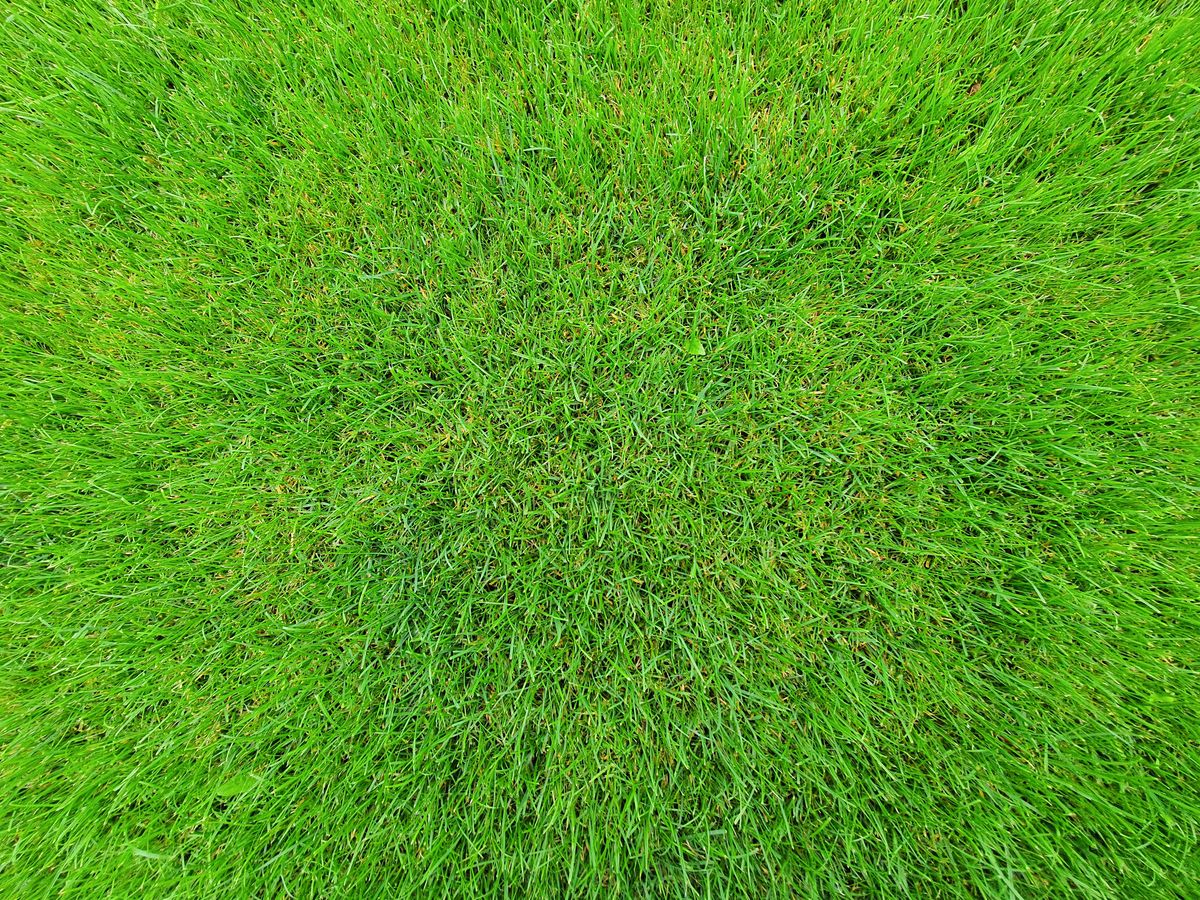
Photo by adrian vieriu on Pexels
By Tondio Team · AI-generated content
Stop watching your shade lawn die every August. Here's the exact summer management guide for turf under tree canopy — mowing, watering, and fungal control.
Summer Lawn Care Tips for Shade Grass That Burns Out Every August
If your lawn looks great in June and looks like a crime scene by mid-August, the problem isn't that you're not trying hard enough. The problem is that shade grass in summer is a completely different animal — and nearly every piece of generic summer lawn advice is written for grass that gets full sun.
You've probably already tried watering more, fertilizing on schedule, and doing everything the bag tells you to do. And it still dies. That's because the turf growing under your trees is dealing with four overlapping stressors at once: heat trapped at ground level, reduced sunlight for photosynthesis, active root competition from the trees above it, and humid conditions that invite fungal disease. Fix one without addressing the others and you're just rearranging deck chairs.
This guide is specifically for that spot. The one under the oak, or the maple, or along the north fence line. Here's how to actually keep it alive through August.
Why Shade Grass Dies in Summer (And Why It's Not Your Fault)
Before you can fix the problem, you need to understand what's actually happening under that canopy in July and August.
Tree canopy does two conflicting things simultaneously: it blocks the sun (reducing the grass's ability to produce energy) while also trapping heat and humidity at ground level. So your shade grass is producing less food than open-lawn grass while simultaneously burning more energy trying to cope with heat stress. That's a losing equation.
On top of that, tree roots are aggressive competitors. A mature oak or maple has a root system that extends well past its drip line, and those roots are pulling moisture and nutrients from the same soil your grass is trying to live in. During a hot, dry August, the tree always wins that competition.
The result is turf that is:
- Thin and weak-stemmed from low light
- Chronically nutrient-stressed from root competition
- Prone to drought stress even when you water consistently
- Sitting in the exact humidity conditions that fungal pathogens love
Understanding this combination is why the fix requires a specific approach — not just "water more" or "fertilize more."
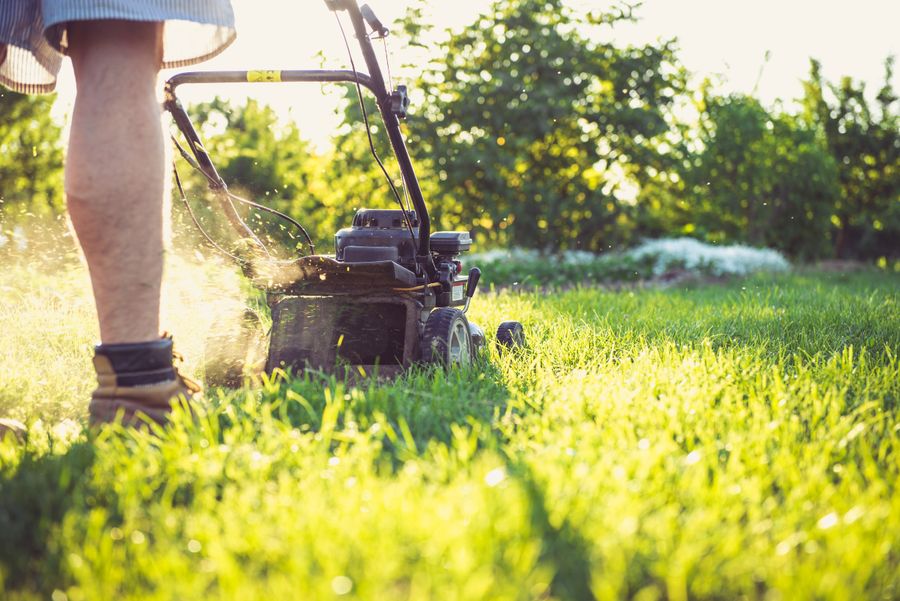
Mow Higher Than You Think You Should
This is the single biggest mistake people make with shade grass, and it's completely understandable because it feels counterintuitive.
Shade grass needs to be mowed 0.5 to 1 full inch higher than the same species in full sun. Here's why: every grass blade is a solar panel. In full sun, a shorter blade can still capture enough light to stay healthy. In shade, the grass is already working with 50–80% less light than it evolved to prefer. Cutting the blade shorter reduces its photosynthetic surface area at exactly the moment it can least afford it.
Recommended Summer Mowing Heights by Species
Use these as your floor — going lower than this in summer under a canopy will cause rapid decline:
| Grass Species | Sun Height | Shade Height (Summer) |
|---|---|---|
| Tall Fescue | 3.0–3.5 in | 4.0–4.5 in |
| Fine Fescue | 2.5–3.0 in | 3.5–4.0 in |
| Kentucky Bluegrass | 2.5–3.5 in | 3.5–4.0 in |
| Perennial Ryegrass | 2.5–3.0 in | 3.5–4.0 in |
| Zoysia | 1.0–2.0 in | 2.0–2.5 in |
| St. Augustine | 3.5–4.0 in | 4.0–5.0 in |
| Centipede | 1.5–2.0 in | 2.0–2.5 in |
How Often Should You Mow Shade Areas?
Less often than your open lawn. Shade grass grows more slowly because it has less light and energy. If you're mowing the whole yard on the same schedule, you're almost certainly over-mowing the shaded sections.
A good rule of thumb: mow when the shade grass reaches about 1.5x your target height. In peak summer, that might mean your open lawn gets mowed every 5–6 days while your shade areas only need it every 9–12 days.
Common mistake to avoid: Scalping shade areas to "match" the rest of the lawn aesthetically. If your shade areas look slightly taller than the rest — that's correct. Fight the urge to even them out.
Pro Tip: Use Tondio to set a separate mowing reminder for your shaded zones. Most people track their whole lawn as one unit and apply the same mowing interval everywhere. Splitting your yard into sun and shade locations in the app means you'll get nudged to mow each area on the schedule it actually needs — not just the schedule your open lawn needs.
Watering Shade Areas: Less Is More (But It's Complicated)
Here's where people get into serious trouble: they assume shade areas need less water because they're shaded and therefore cooler. Sometimes that's true. Sometimes it's the exact opposite.
The reality depends on what's causing the shade.
Tree Canopy Shade vs. Structure Shade
- Under trees: The soil dries out unpredictably. Tree roots are constantly pulling moisture up and away. The canopy also intercepts rainfall — a 0.75-inch rain event might only deliver 0.2–0.4 inches to the soil under a dense oak. These areas often need more careful monitoring, not less water.
- Under structures (fences, buildings, pergolas): No root competition, and the soil tends to stay consistently moist longer. These areas genuinely need less frequent watering.
Treating both situations the same is a mistake that leads to either drought stress or the fungal conditions described below.
The Right Watering Approach for Shaded Turf Under Trees
Water deeply and infrequently — but check soil moisture before you commit to a schedule. The target is 1.0–1.5 inches of water per week total (irrigation + rainfall), delivered in 2 sessions per week max. Daily light watering under a tree canopy is one of the fastest ways to invite fungal disease.
Practical steps:
- Use a screwdriver test before watering. Push a 6-inch screwdriver into the soil. If it slides in easily, you have adequate moisture. If it's hard and resistant after the first inch or two, water is needed.
- Water in the early morning (5–8 a.m.), never in the evening. Shade areas under canopy dry more slowly than open lawn. Evening watering means the grass stays wet all night — prime fungal territory.
- Account for canopy interception. If your weather station recorded 0.75 inches of rain but your trees are dense, assume the soil under them received 40–60% of that. Adjust your irrigation accordingly.
- Reduce run time, not frequency, if you suspect overwatering. If you're watering twice a week and seeing signs of disease, cut each session from 20 minutes to 12 minutes before eliminating a session entirely.
Common mistake to avoid: Running the same irrigation zone over shaded and sunny areas simultaneously. If your irrigation zones mix sun and shade, the shade areas are almost certainly getting too much water relative to what they can absorb and dry out from.
Pro Tip: Tondio lets you log rainfall and irrigation events by zone, so you can see at a glance how much water your shade areas have actually received — including a realistic adjustment for canopy interception. When August hits and you're trying to figure out why things are declining, that log becomes incredibly valuable instead of just guessing.
The Fungal Diseases Targeting Your Shade Grass Right Now
This is the section most summer lawn guides skip entirely. But if your shade grass routinely fails in July and August, there's a very good chance fungal disease is either the primary cause or a major contributing factor — not just drought or heat on their own.
Shaded turf in summer sits in the perfect conditions for pathogens: reduced airflow, prolonged leaf wetness, weakened grass plants, and warm soil temperatures typically between 70–85°F at night. Here's what to watch for.
Brown Patch (Rhizoctonia solani)
Most common shade lawn killer in summer. Brown patch thrives when nighttime temperatures stay above 70°F and the grass stays wet for extended periods.
What to look for:
- Circular or irregular patches of brown, tan, or water-soaked grass — typically 6 inches to several feet in diameter
- A dark, water-soaked "smoke ring" border around the patch in the early morning (this disappears as the day heats up — check before 9 a.m.)
- Individual blades show tan lesions with a dark brown border
- Patches appear seemingly overnight after hot, humid weather
Most at-risk grasses: Tall fescue, perennial ryegrass, Kentucky bluegrass, St. Augustine
Temperature trigger: Develops rapidly when daytime temps exceed 85°F and nighttime temps stay above 70°F for 48+ consecutive hours
Dollar Spot (Clarireedia jacksonii)
Smaller and sneakier than brown patch, but equally damaging to already-stressed shade turf.
What to look for:
- Small, silver-dollar-sized patches (2–6 inches across) of bleached or straw-colored grass
- Patches can merge into larger irregular areas as the disease progresses
- White, cobweb-like mycelium on the grass in early morning (disappears quickly)
- Individual blades show distinctive hourglass-shaped lesions — tan in the center with a reddish-brown border
Most at-risk grasses: Fine fescue, Kentucky bluegrass, perennial ryegrass, zoysia, bermuda
Key risk factor: Dollar spot loves nitrogen-deficient turf. If your shade grass is already nutrient-stressed from tree root competition, it's significantly more vulnerable.
Pythium Blight (Pythium spp.)
The fastest-moving of the three, and the most alarming to witness.
What to look for:
- Greasy, water-soaked patches that appear almost overnight
- Affected grass feels slimy or matted when you walk through it
- Cottony white mycelium visible in early morning under high humidity
- Patches can expand several inches per day in ideal conditions
- Grass collapses and turns light tan or orange quickly
Most at-risk grasses: Perennial ryegrass, tall fescue (especially in newly seeded or thin areas)
Temperature trigger: Pythium blight requires both daytime temps above 85–95°F AND nighttime temps above 70°F, typically combined with rain or irrigation. It's a mid-to-late summer disease that hits hard after humid, stormy periods.
Early Detection Is Everything
By the time these diseases look severe, you're already two weeks behind. The window for effective intervention is the first 3–5 days of symptom appearance.
Walk your shade areas every 2–3 days during July and August. Look specifically in the early morning when mycelium is visible. Check after any period of 48+ hours of heat above 85°F combined with nighttime temps above 68°F.
Pro Tip: Use Tondio's photo documentation feature to capture early-stage symptoms. Taking a dated photo of a suspicious 4-inch spot lets you compare it 3 days later to confirm whether it's spreading — which tells you whether you're dealing with disease or just drought stress. These two things can look almost identical in early stages, and treating drought stress with fungicide (or disease with more water) will make your problem significantly worse.
Fertilizing Shade Grass in Summer: Pull Back, Don't Push
Most people want to throw fertilizer at struggling shade grass in August. Resist the urge.
Heavy nitrogen in peak summer heat stresses shade grass more than it helps it. Nitrogen pushes soft, rapid top growth — and soft, rapidly growing tissue is exactly what fungal pathogens love to attack. In shade, where the grass is already weakened, a heavy summer feeding can trigger a disease outbreak within 2 weeks.
What to Do Instead
- If your grass is actively declining in July–August, do not fertilize. Stabilize first (address watering and disease), then fertilize in early fall when the grass can actually use it.
- If you want to support shade grass through summer, use a low-nitrogen, slow-release product at half the recommended rate. Look for a formulation in the range of 5-10-10 or 6-0-6 NPK — lower nitrogen, some potassium for stress tolerance.
- Potassium (the third number) is your friend in summer. It strengthens cell walls and improves heat and drought tolerance. A light potassium application in late June or early July is far more beneficial for shade grass than a nitrogen push.
- Never fertilize when temperatures are consistently above 90°F or when the grass is visibly heat-stressed. Wait for a cooler window.
Common mistake to avoid: Using the same fertilizer schedule for shade and sun areas. Your open lawn might benefit from a summer feeding — your shade grass almost certainly doesn't.
Your August Shade Lawn Action Plan
If you're reading this in the middle of the problem, here's what to do right now — in order.
Immediate (This Week)
- Stop mowing shade areas short. Raise your deck to the species heights listed above
- Check your watering schedule and confirm you're watering early morning only
- Walk your shade areas at dawn and photograph any suspicious spots for documentation
- Identify whether you have brown patch, dollar spot, or pythium blight based on the descriptions above
Short-Term (Next 2 Weeks)
- Adjust irrigation run times separately for shaded zones vs. open lawn
- Apply a contact or systemic fungicide if disease is confirmed — contact your local extension service or garden center for a labeled product recommendation based on your region and grass type
- Hold off on any nitrogen fertilizer until temperatures drop below 85°F consistently
- Consider a light potassium-focused application if grass is showing general stress
Seasonal (Rest of Summer into Early Fall)
- Keep mowing intervals longer for shade areas — let the plant recovery between cuts
- Plan for overseeding thin shade areas in early fall (September for cool-season grass) — this is the real recovery window
- Consider whether your shade areas are viable long-term or whether a groundcover or mulch alternative makes more sense for very dense canopy areas
- Log all treatments and observations so you have a complete record heading into next year
Pro Tip: Set up your shade lawn as a separate location in Tondio so you can track its care independently from the rest of your yard. When next June rolls around, you'll have last year's complete treatment timeline — including what worked, what didn't, and exactly when things started going sideways. That kind of year-over-year data is what separates the people who break the August burnout cycle from the ones who keep repeating it.
The Real Problem With Shade Grass Is Timing
Here's the honest truth: most of the interventions that would genuinely save your shade grass in August should have happened in May and June. That's not to discourage you — it's to help you plan differently next year.
Shade grass heading into summer needs to be as strong and dense as possible before heat arrives. That means the right mowing height from the first cut of the season, conservative watering from the start, and no aggressive fertilizer pushes in early summer that make the grass lush and vulnerable.
The grass that survives August is the grass that was managed conservatively all summer — not the grass that got rescued in August.
If you're managing a shade lawn that struggles every year, commit to treating it as a separate management zone from the first mow of the season. Different mowing height, different watering schedule, different fertilizer approach, and early eyes on any disease symptoms.
Your shade grass is not failing because it's inherently unfixable. It's failing because it's been managed like sun grass. Change the approach, and August stops being a funeral.
Track your shade lawn separately this season with Tondio. Log your mowing heights, watering events, and treatment dates so next year you have the data to get ahead of the problem instead of chasing it.